Rethinking Thermal Comfort in the Tropics: The Business Case for Hybrid Cooling in Singapore’s Built Environment
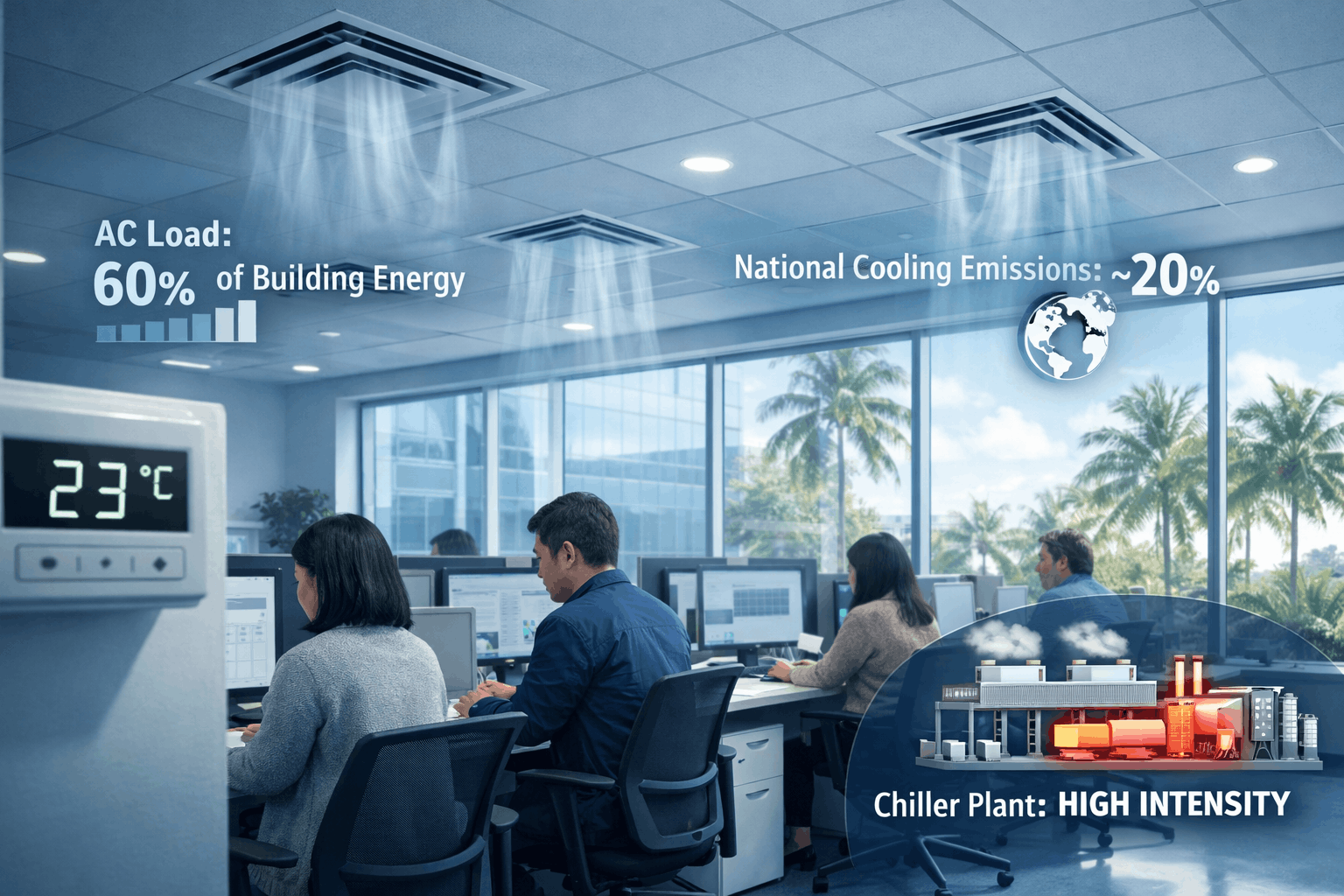
For building managers and energy managers in Singapore, the mandate to decarbonize the built environment has never been more urgent. With household and commercial air conditioning (AC) accounting for nearly 20% of the country’s total carbon emissions, and space cooling routinely consuming between 40% to 60% of a building’s total electrical load, optimizing thermal management is critical. As the Building and Construction Authority (BCA) continues to raise the bar with its Green Mark 2021 standards—pushing the industry toward Super Low Energy (SLE) and Zero Energy (ZE) buildings—facility leaders are finding that conventional HVAC efficiency measures are reaching their physical and economic limits.
To achieve the next massive leap in energy reduction without sacrificing occupant satisfaction, a paradigm shift is required. That shift is hybrid cooling, an innovative approach that transitions the focus from cooling the air in a room to cooling the people within it.
The Mechanics of Hybrid Cooling: A Thermodynamic Paradigm Shift
The fundamental challenge with conventional air conditioning in hot, humid climates like Singapore is its thermodynamic inefficiency. Standard systems prioritize reducing the dry-bulb air temperature to a static setpoint (typically 22°C to 24°C), a process that requires massive energy inputs to simultaneously cool the air and remove latent heat through dehumidification.
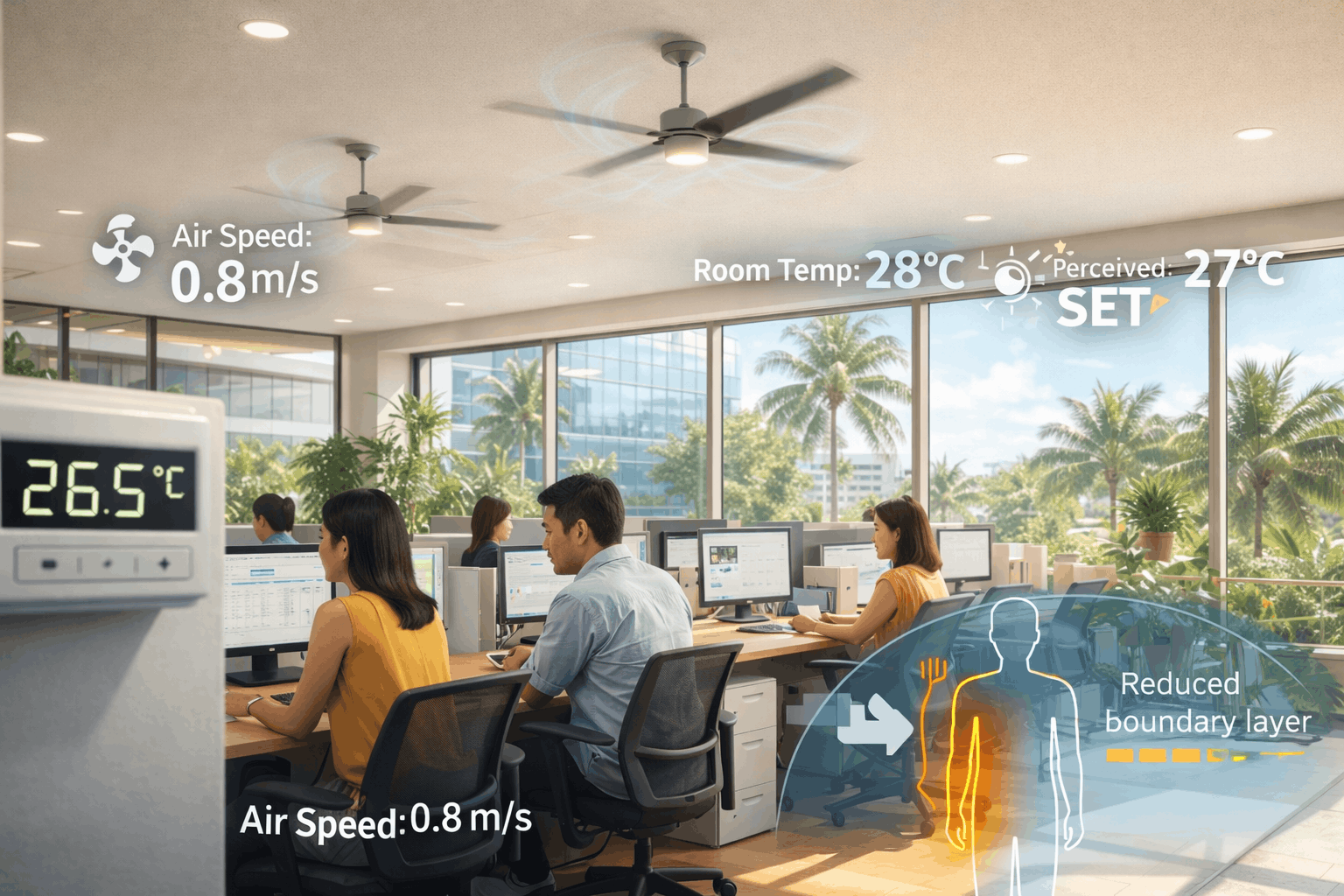
Hybrid cooling fundamentally decouples these processes. Instead of relying on a sealed, heavily refrigerated environment, hybrid systems supply tempered, pre-cooled air at higher temperatures—typically resulting in an operative room temperature of 26°C to 29°C—and pair this with elevated air speeds generated by high-efficiency ceiling fans.
The effectiveness of this model is grounded in the physics of the Standard Effective Temperature (SET) index. By introducing a controlled air velocity of approximately 0.7 to 0.8 meters per second, the system reduces the boundary layer of air around the human body, accelerating heat dissipation through convective and evaporative cooling directly at the skin surface. Consequently, while the room’s absolute temperature may be 29°C with a higher humidity ratio (15–20 g/kg), the perceived SET for the occupant is driven down to a highly comfortable 27°C.
Unlocking Drastic Energy Reductions and Fulfilling Green Mark Standards
For energy managers evaluating the Return on Investment (ROI) of hybrid systems, the energy savings are unparalleled. The most intensive energy draw in any tropical building is the chiller load required to drop air temperatures to conventional setpoints.
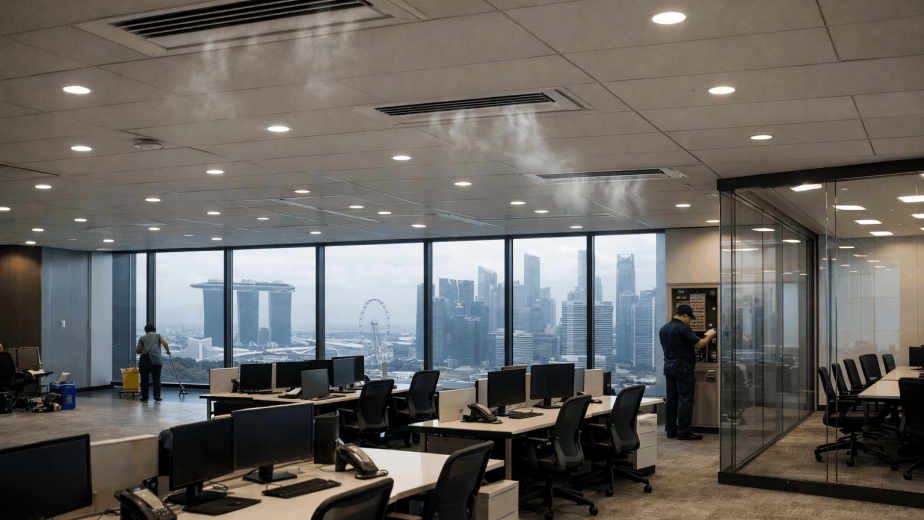
Through the Singapore-Berkeley Building Efficiency and Sustainability in the Tropics (SinBerBEST) program, researchers piloted hybrid cooling in a “living laboratory” at the BCA Academy’s Zero Energy Plus Building (ZEB+). During an 11-week trial in a 675 m2 open-plan office, simply raising the AC setpoint from 24°C to 26.5°C and turning on ceiling fans resulted in a staggering 32% reduction in total energy consumption.
The ROI of this approach lies in the “fan economy.” Ceiling and desk fans are incredibly cheap to procure, install, and operate. In the SinBerBEST trial, the fans consumed a mere 0.88 kWh/m2/year—accounting for just 3.5% of the total building energy use—yet this minimal electrical input enabled a massive one-third reduction in the energy-intensive chiller load. For existing buildings undergoing retrofits, leveraging established technology like the humble electric fan presents a highly cost-effective intervention with immediate payback, especially amidst spiking electricity prices.
Enhancing Occupant Health, Wellbeing, and Productivity
A common apprehension among building managers is that raising temperatures will trigger occupant complaints. However, field data proves the opposite. Overcooling is a pervasive and highly complained-about issue in Singaporean office buildings. In the SinBerBEST trials, reports of perceived overcooling plummeted from 33% to just 9% when the hybrid model was implemented.
Furthermore, premium hybrid cooling systems, such as the one pioneered in the National University of Singapore’s School of Design and Environment 4 (SDE4) building, operate on a 100% fresh air, single-pass ventilation model. Rather than heavily recirculating stale air, fresh pre-cooled air is supplied directly to the spaces and allowed to spill over into corridors and transitional areas. This design virtually eliminates the buildup of carbon dioxide and Volatile Organic Compounds (VOCs), keeping indoor CO2 concentrations safely below 750 ppm. This pristine Indoor Environmental Quality (IEQ) was a major factor in SDE4 becoming the first university building globally to attain the prestigious WELL Certified™ Gold standard.
Landmark Implementations in Singapore: The SDE4 Success Story
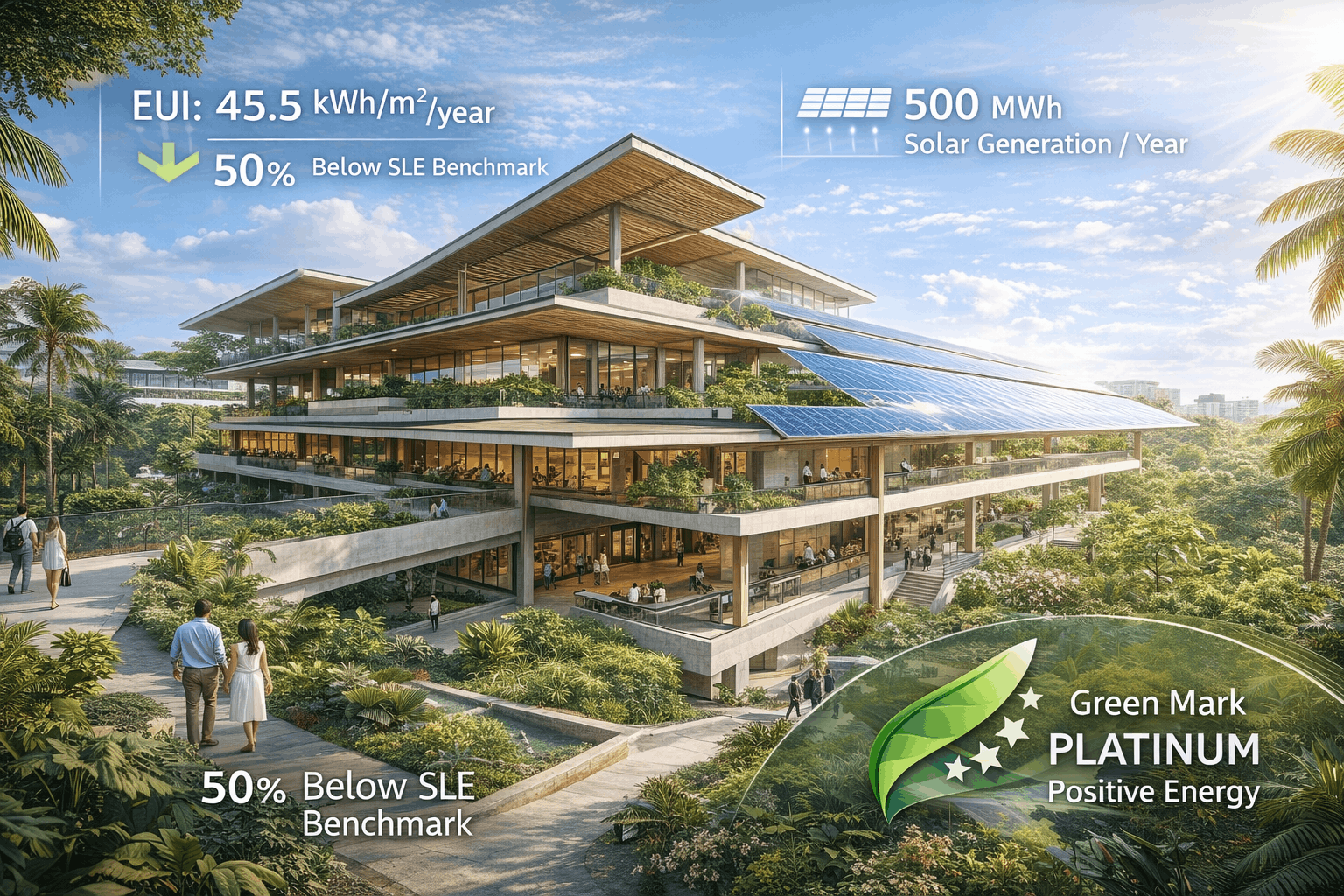
The most comprehensive proof-of-concept for hybrid cooling in the tropics is NUS SDE4, Singapore’s first purpose-built net-zero energy building. Designed as a 8,588 square-meter living laboratory, SDE4 integrates tropical architecture—such as large overhanging roofs and porous layouts—with an optimized hybrid cooling system.
The operational results of SDE4 provide a clear benchmark for what is possible under the BCA Green Mark framework. The BCA’s reference Energy Usage Intensity (EUI) for Super Low Energy (SLE) educational buildings is 90 kWh/m2/year. By leveraging hybrid cooling alongside smart sensors and passive design, SDE4 achieved an unprecedented EUI of 45.5 kWh/m2/year—a 50% reduction against the stringent SLE benchmark.
Because the cooling energy consumption was reduced by over 20% compared to conventional systems, the building’s rooftop solar photovoltaic array (which generates roughly 500 MWh/year) was able to produce more energy than the building consumed. As a result, SDE4 was awarded the BCA Green Mark 2021 in Operation Platinum Positive Energy Award, cementing hybrid cooling as a viable pathway to net-positive operations.
This success is actively being scaled. The university recently retrofitted the Yusof Ishak House (YIH) into a net-zero energy building using a similar hybrid cooling approach, setting thermostats to 26.5°C and utilizing occupancy-activated fans to target a 72% cut in pre-renovation energy use. Beyond the campus, light retrofit demonstrations using hybrid field evaluation kits have been deployed in more than 10 academic and commercial buildings across Singapore, yielding average energy savings of 27% alongside a 10% measurable increase in occupant satisfaction.
Future-Proofing with AI: Deep Reinforcement Learning (DRL)
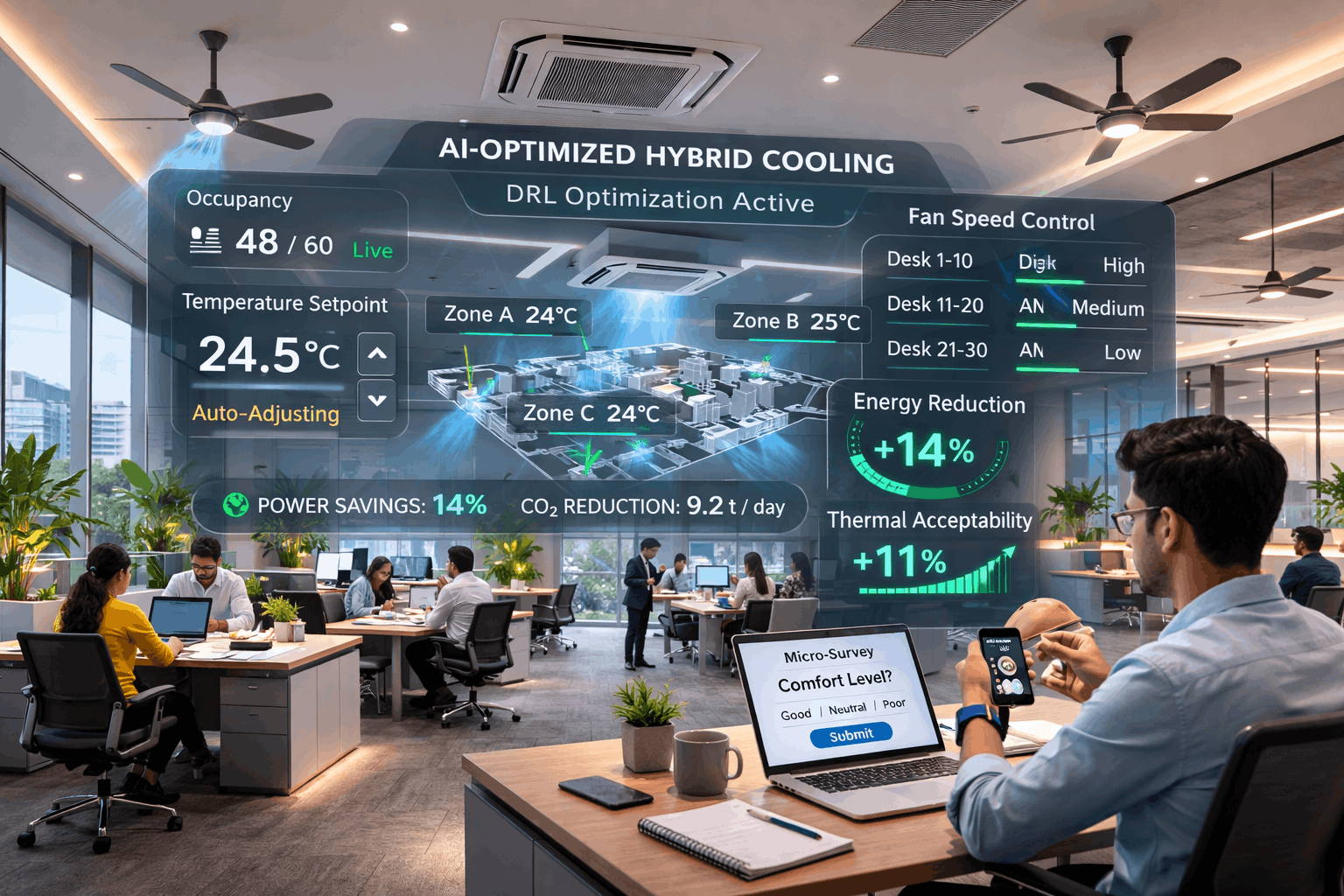
For advanced facilities management, the next evolution of hybrid cooling integrates Artificial Intelligence to autonomously manage the complex variables of thermal comfort. While traditional Building Management Systems (BMS) rely on static rule-based controls, researchers at NUS have successfully deployed Deep Reinforcement Learning (DRL) algorithms to govern hybrid spaces.
Using a specialized Branching Dueling Q-network (BDQ), the AI agent dynamically controls multivariate actions in real-time, simultaneously adjusting the room’s temperature setpoint and individual ceiling fan speeds based on live occupancy data and continuous comfort feedback collected from users via smartwatch microsurveys.
When tested in a real office space within SDE4, this occupant-centric DRL framework delivered a 14% additional reduction in cooling energy and an 11% improvement in total thermal acceptability, completely outperforming optimized baseline static strategies. For energy managers, integrating AI with hybrid cooling means the building continuously learns and adapts to its specific tenants, driving operational expenditure (OpEx) down while maximizing human comfort.
Conclusion: A Strategic Imperative for the Built Environment
The adoption of hybrid cooling is no longer just an experimental academic exercise; it is a validated, highly lucrative strategy for tropical real estate. By shifting to a model of tempered air and elevated air speeds, building managers can drastically slash their intensive chiller loads, easily achieving and surpassing BCA Green Mark Platinum and SLE targets.
Simultaneously, the reduction in required ductwork and false ceilings lowers capital expenditure (CapEx) and embodied carbon during construction or retrofitting. As Singapore intensifies its push toward carbon neutrality, hybrid cooling represents the definitive blueprint for delivering world-class indoor environments that are fundamentally aligned with the economic and environmental realities of the 21st century.
References
- Kent, M., Schiavon, S., & Spanos, C. (2023). Hybrid Cooling Leads to Significant Energy Savings in Tropical Office Buildings. Berkeley Education Alliance for Research in Singapore (BEARS) / SinBerBEST.
- The Efficacy of Hybrid Cooling in High-Performance Tropical Architecture: A Technical Evaluation of the NUS SDE4 Living Laboratory.
- Lei, Y., Zhan, S., Ono, E., Peng, Y., Zhang, Z., Hasama, T., & Chong, A. (2022). A practical deep reinforcement learning framework for multivariate occupant-centric control in buildings. Applied Energy, 324, 119742.
- National University of Singapore. (2022). Zero Energy and beyond: NUS SDE4 attains Green Mark Positive Energy Award. NUS News.
- National University of Singapore. (2024). NUS Sustainability Report 2024 – Singapore.
- National University of Singapore. (2019). NUS SDE4 receives international recognition for building features designed to improve health and wellness.
- National University of Singapore. (2020). NUS SDE4 is first in Southeast Asia to achieve ILFI Zero Energy certification. NUS News.