Smart Toilet Solution in Singapore: Cost-Effective, Low-Maintenance, Multi-Floor Coverage
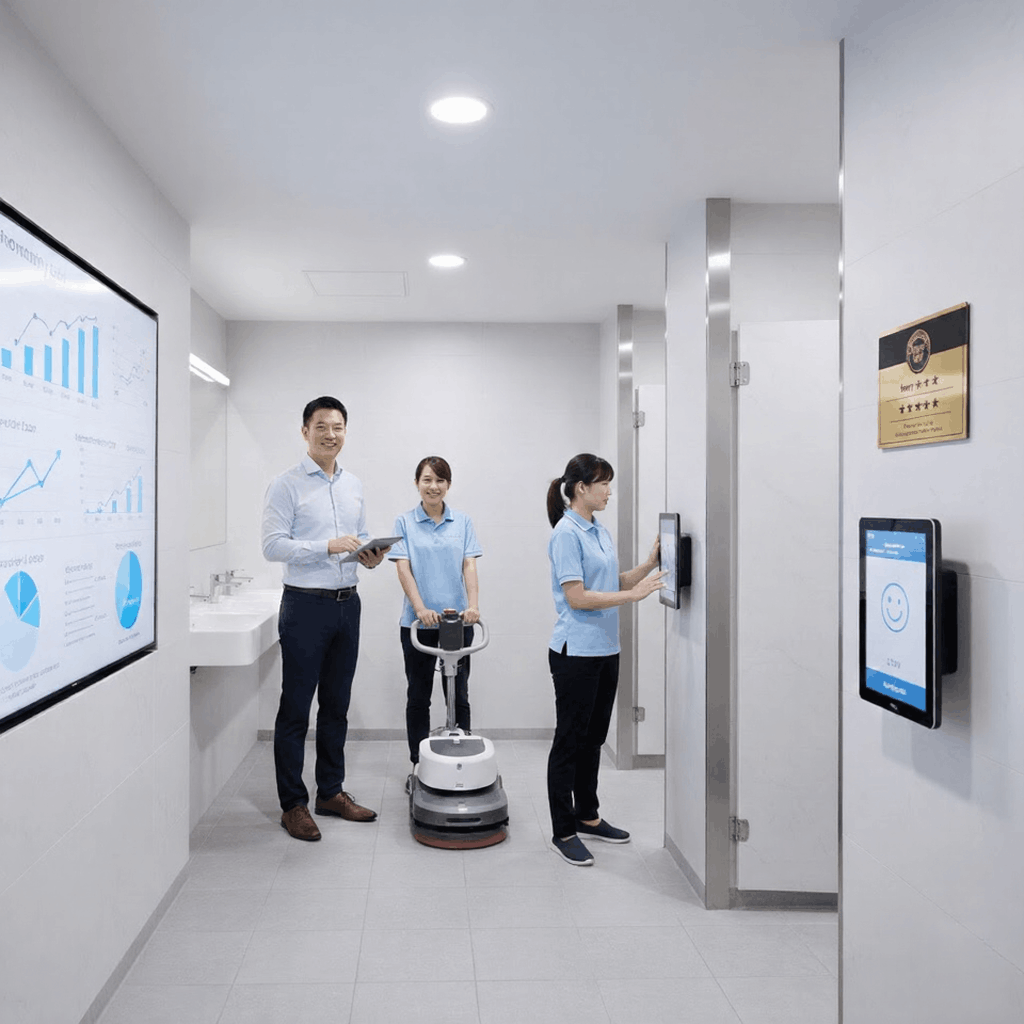
Smart Toilet solutions are increasingly adopted in Singapore for commercial buildings, shopping malls, offices, schools, hospitals, and transport hubs where washroom cleanliness, uptime, and fast response are critical.
A Smart Toilet system is designed specifically for real-world toilet environments—thick walls, cubicles, wet areas, and high foot traffic—where Wi-Fi and cellular solutions often struggle. By combining long-range indoor connectivity, battery-powered sensors, and workflow automation, LoRaWAN delivers a solution that is both functionally effective and cost-effective at scale.
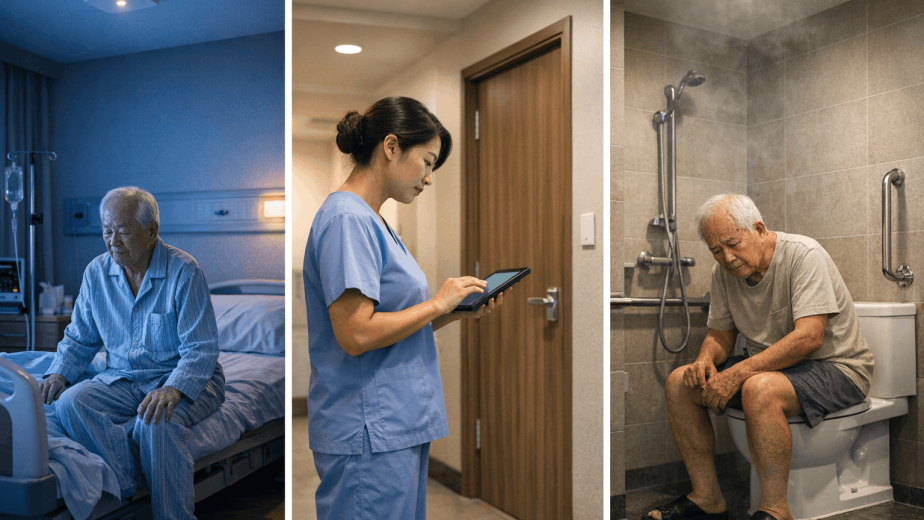
Cleaners and supervisors for smart toilet. Training on how to use smart toilet solution
Why LoRaWAN Smart Toilet Systems Work Better Indoors
Toilets are usually located deep inside buildings, surrounded by reinforced concrete, partitions, and service shafts. These conditions degrade Wi-Fi reliability and often result in unstable connections and higher maintenance effort.
A Smart Toilet system uses low-power, long-range wireless communication that is well suited for these environments.
Key advantages include:
- One gateway can often receive sensor data from multiple floors
- Sensors do not depend on corporate Wi-Fi or SIM cards
- Stable communication even inside cubicles and enclosed washrooms
With a gateway such as the Milesight UG56 LoRaWAN Gateway, building owners can significantly reduce infrastructure cost and complexity.
Cost Effectiveness of a Smart Toilet Deployment
From a total cost of ownership perspective, a LoRaWAN Smart Toilet solution is more economical than Wi-Fi or cellular alternatives once deployment scales beyond a small pilot.
Key cost advantages:
- Fewer gateways required due to strong indoor penetration
- Battery-powered sensors eliminate power wiring in toilets
- Lower IT dependency, reducing coordination with building networks
- Predictable maintenance cost over multiple years
In multi-floor buildings, gateway count is often the largest hidden cost. LoRaWAN minimizes this risk.
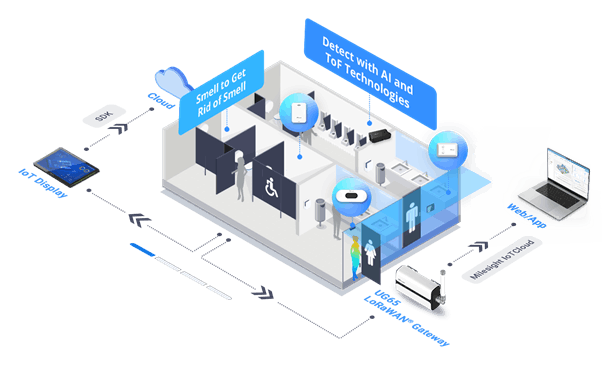
Smart Toilet Devices in a LoRaWAN Architecture
A production-ready Smart Toilet solution typically includes the following devices.
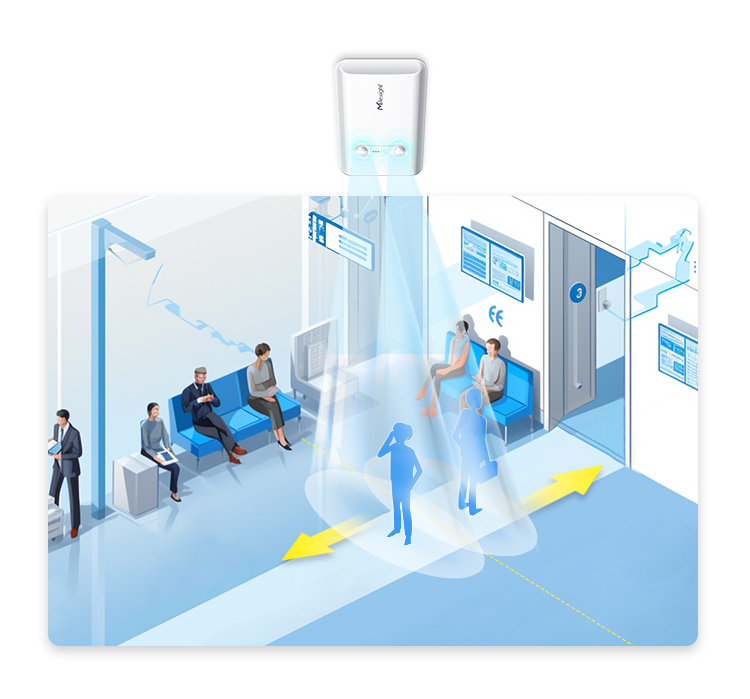
Footfall and Usage Analytics
The Milesight VS350 is used for people counting at washroom entrances or shared zones. In a Smart Toilet deployment, it provides:
- Peak usage analysis by time and location
- Data to optimize cleaning frequency
- Objective demand signals for manpower planning
This data helps facilities teams align cleaning resources with actual usage rather than fixed schedules.
Ammonia Monitoring for Odour and Hygiene Risk
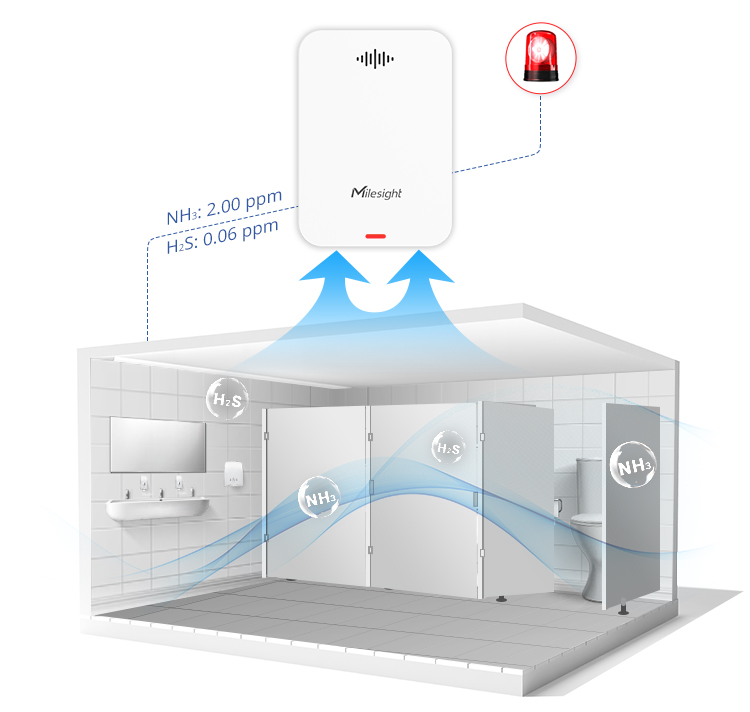
The Milesight GS301 is an ammonia (NH₃) sensor designed to detect odour build-up and hygiene risk in washrooms. In a Smart Toilet system, ammonia levels can be used to:
- Trigger cleaning or ventilation alerts when NH₃ exceeds thresholds
- Identify toilets with recurring odour problems through trend analysis
- Validate whether cleaning actions or ventilation improvements are effective
Ammonia sensing allows facilities teams to move from complaint-driven response to proactive washroom hygiene management, which is especially important in high-traffic Singapore toilets.
Consumable Level Sensors
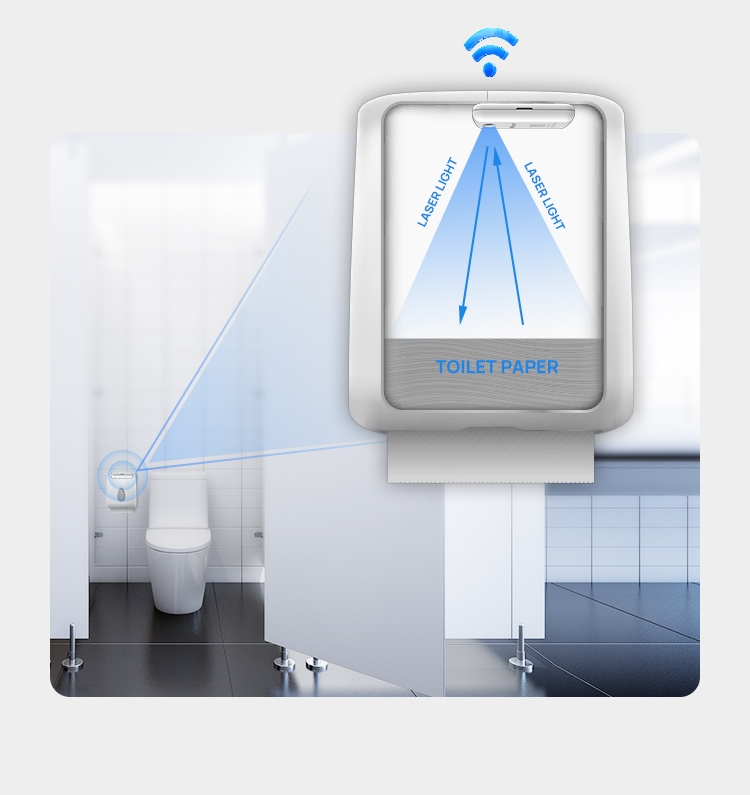
The Milesight WS201 level sensor is commonly deployed in a Smart Toilet system to monitor:
- Toilet paper dispensers
- Hand towel stock levels
Consumable monitoring is one of the highest-ROI components of Smart Toilet deployments, as it directly prevents user complaints and service escalations.
User Feedback Panel
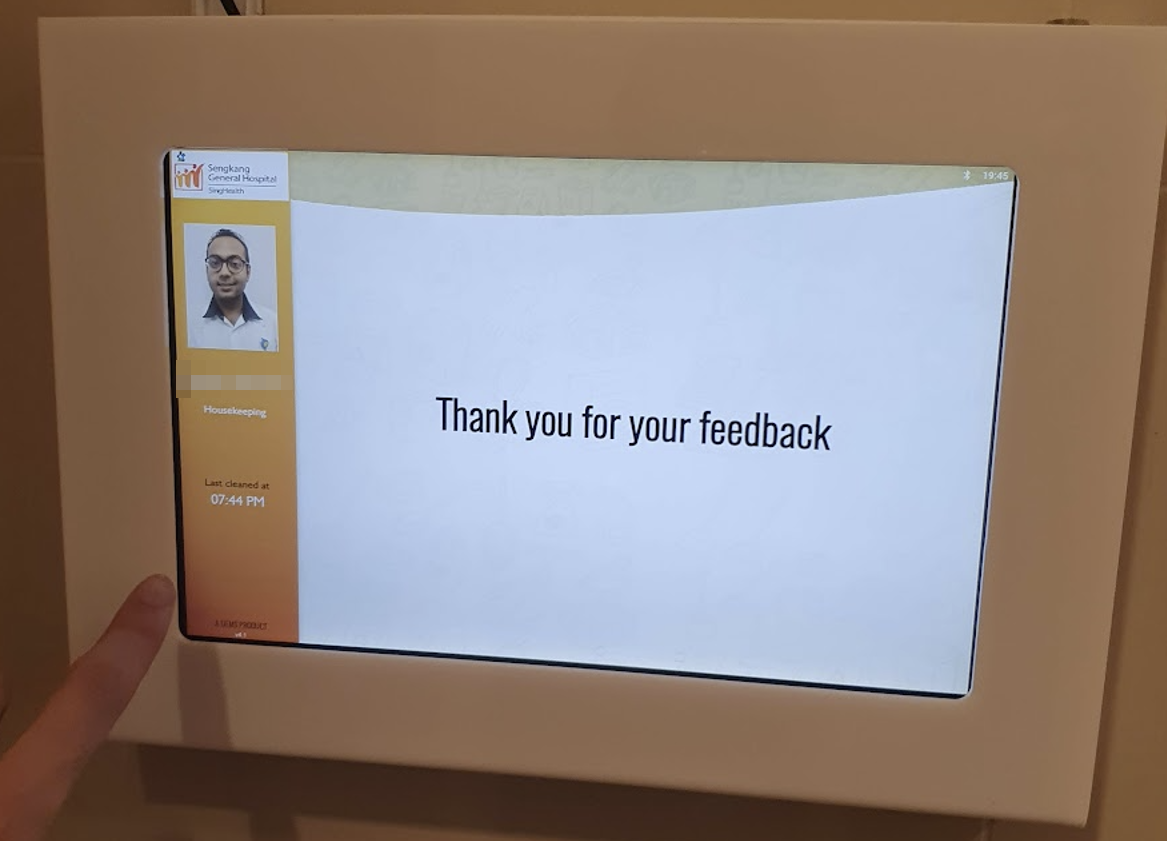
The NEX-L10 feedback panel captures real-time user sentiment at the washroom exit. Feedback data can be correlated with:
- Footfall volume from VS350
- Ammonia levels from GS301
- Consumable availability from WS201
This transforms subjective feedback into measurable service performance indicators.
Multi-Floor Coverage Backbone
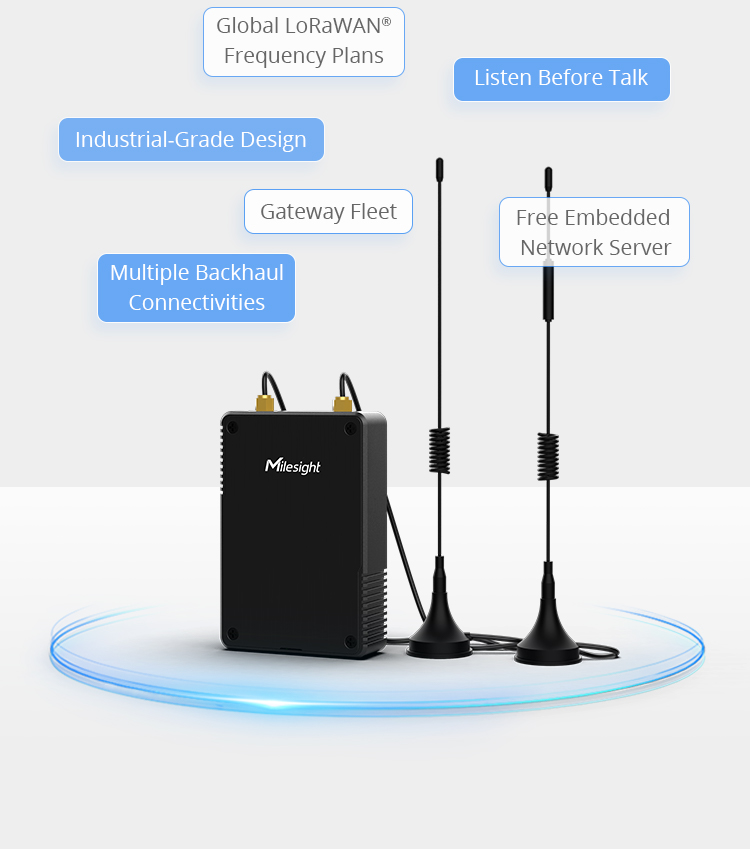
The UG56 LoRaWAN Gateway forms the backbone of the Smart Toilet system:
- Receives sensor data across multiple floors
- Reduces the number of gateways required
- Improves overall system reliability
Fewer gateways mean lower hardware cost, simpler deployment, and easier long-term support.
Low Maintenance Design for Singapore Toilets
Singapore washrooms operate in demanding conditions:
- High humidity
- Frequent chemical cleaning
- Heavy daily usage
A Smart Toilet system is designed for these realities. Sensors are optimized for low transmission frequency, enabling battery replacement cycles of up to 4 years, depending on configuration.
This results in:
- Fewer site visits
- Less disruption to washroom operations
- Lower long-term maintenance cost
For facilities managers, predictable low maintenance is often more valuable than low upfront sensor cost.
Dashboard and Telegram Alert Workflow
The operational value of a Smart Toilet solution comes from workflow automation rather than raw data.
Central Dashboard
The dashboard provides:
- Real-time sensor status
- Open and closed incidents
- Ammonia and consumable trends
- Usage analytics and KPIs
Telegram Alerts with Incident Closure
When issues occur—such as low consumables, high ammonia levels, or negative user feedback—alerts are sent via Telegram to cleaners and supervisors on site.
Cleaners can close the incident by replying to the Telegram alert, automatically updating the dashboard. This enables:
- Clear accountability
- Accurate response-time tracking
- Minimal administrative overhead
Conclusion: Why LoRaWAN Smart Toilet Is the Right Choice
A Smart Toilet solution offers the best balance of reliability, scalability, and cost efficiency for Singapore buildings.
Key benefits include:
- Multi-floor indoor coverage with fewer gateways
- Long-life battery sensors with low maintenance
- Proven devices such as VS350, GS301 (ammonia), WS201, UG56, and NEX-L10
- Actionable workflows using dashboards and Telegram alerts
For organizations looking beyond pilots to full-scale deployment, LoRaWAN is the most practical and sustainable Smart Toilet connectivity choice.