Augmenting Caregivers with Privacy-Safe Fall Detection: Why Hospitals and Senior Homes Should Deploy Non-intrusive Fall Detection Sensors
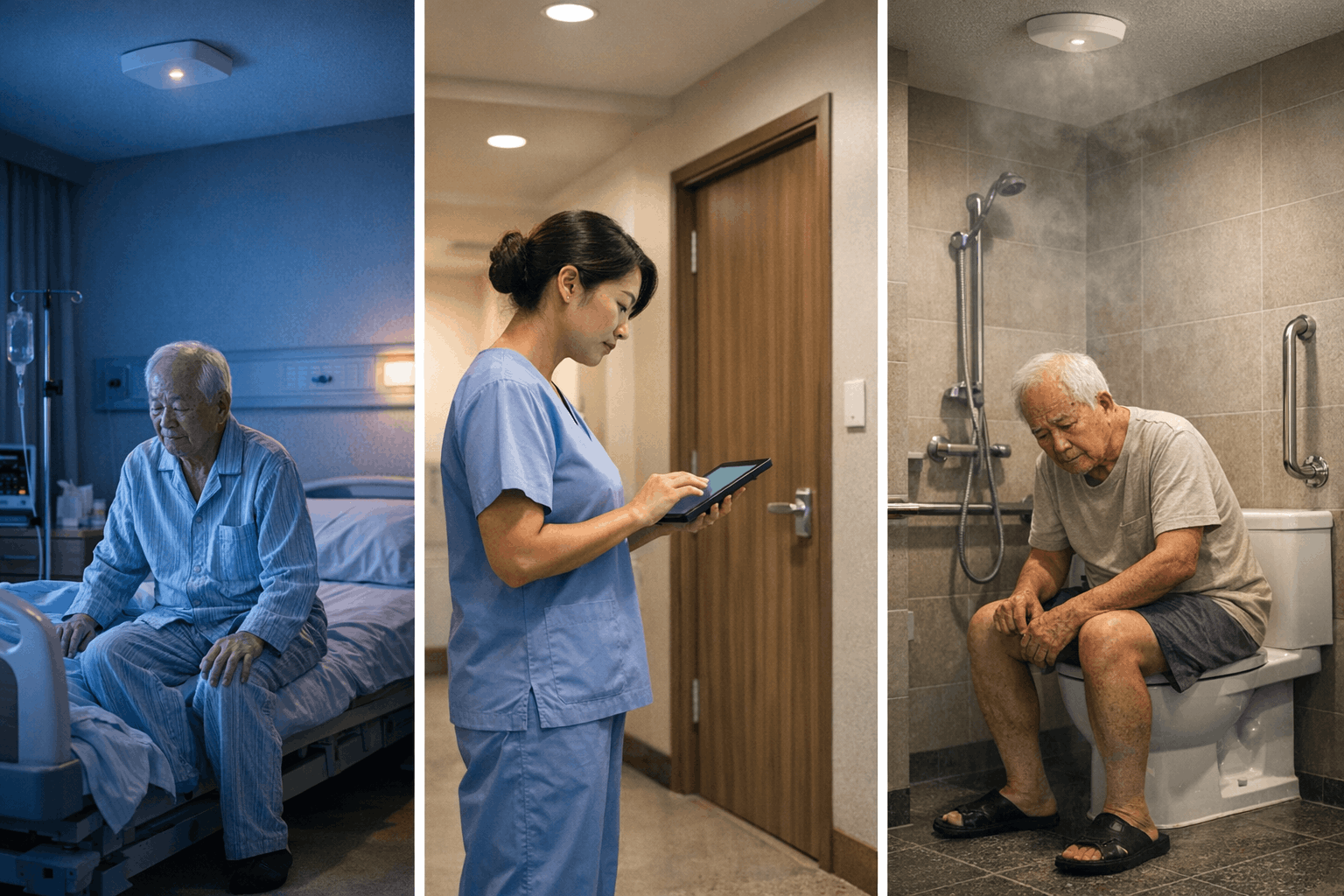
Healthcare leaders face a difficult balance: improve patient safety, reduce fall incidents, and support overstretched caregivers — without compromising privacy or adding operational complexity. As staffing ratios tighten and patient acuity rises, innovation teams are increasingly looking for non-intrusive monitoring solutions that augment care rather than replace it.
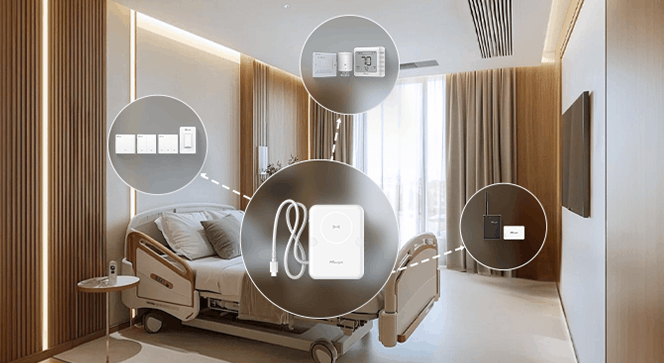
Designed for hospital and home useOne solution gaining attention is the Milesight VS373, a 60 GHz mmWave radar-based fall detection and bed-exit monitoring sensor designed for indoor healthcare environments.
This article explains how VS373 works, where it fits in clinical workflows, and why hospitals and senior homes should consider deploying it as part of a broader patient safety strategy.
The Operational Challenge: Falls and Unsupervised Bed Exits
Patient falls remain one of the most common adverse events in hospitals and long-term care facilities. High-risk zones include:
- Patient beds (unsupervised bed exit attempts)
- Toilets and bathrooms (wet floors, dizziness, mobility issues)
- Night hours with reduced staffing
Traditional solutions have limitations:
- Pressure mats generate nuisance alarms and require physical contact.
- Wearables depend on patient compliance and battery management.
- CCTV is unsuitable for bedrooms and bathrooms due to privacy regulations.
- Manual rounds are resource-intensive and reactive.
Management teams need a solution that is:
- Non-contact
- Privacy-preserving
- Reliable in darkness and humidity
- Capable of early alerts
- Easy to integrate into existing nurse workflows
This is where radar-based sensing becomes strategically relevant.
What is VS373 and How Does It Work?
The Milesight VS373 uses 60 GHz 4D mmWave radar with AI algorithms to detect human motion patterns, posture changes, and fall events.
Unlike cameras, radar does not capture images. Instead, it analyzes movement signatures and spatial positioning through point-cloud data. This enables:
- Bed-exit attempt detection
- Fall detection
- Motionless state monitoring
- Occupancy awareness
Because it does not rely on visual recording, it is suitable for sensitive areas such as bedrooms and toilets.
Use Case 1: Bed Exit Monitoring (Early Intervention)
Most falls do not occur randomly — they happen during unsupervised bed exits.
Patients may:
- Sit upright
- Shift toward the edge of the bed
- Attempt to stand without assistance
The VS373 can detect these movement patterns before the patient fully stands. When configured appropriately:
- The sensor identifies bed-exit behavior.
- An alert is sent to the nurse station or caregiver device.
- Staff intervene before a fall occurs.
This shifts the model from reactive fall detection to proactive fall prevention.
For management teams, this translates into:
- Reduced incident rates
- Lower liability exposure
- Better compliance with patient safety KPIs
- Improved caregiver response time
Importantly, the system augments — not replaces — nursing workflows.
Use Case 2: Bathroom Fall Detection with Privacy Protection
Bathrooms are among the highest-risk areas in healthcare facilities.
Doors are closed. Floors are wet. Patients may experience dizziness or weakness. Yet cameras are not acceptable in such spaces.
VS373 addresses this gap:
- Ceiling-mounted installation
- No video recording
- Works in darkness
- Operates reliably in humid conditions
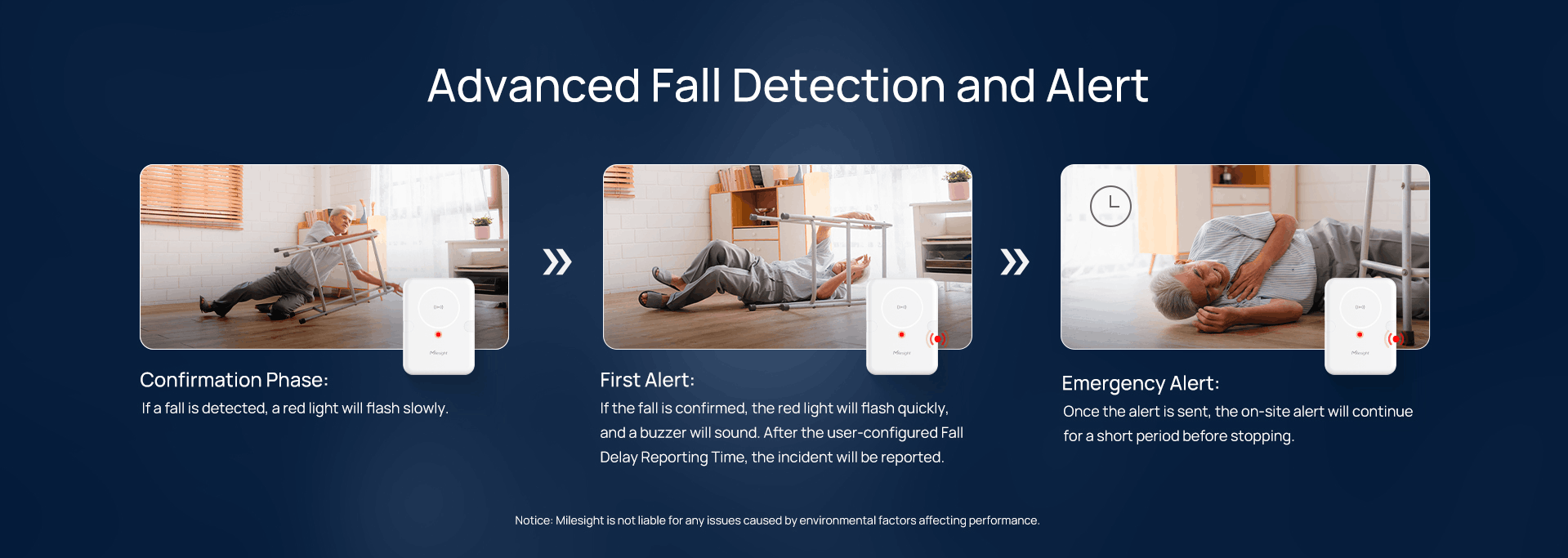
- Detects fall posture and prolonged motionless state
When a fall is detected, alerts can be integrated into existing nurse call systems or IoT dashboards.
For innovation teams, this offers a way to close a long-standing blind spot in patient monitoring — without breaching privacy regulations.
Why Radar-Based Monitoring is Strategically Different
- Privacy by Design
Hospitals and senior homes must comply with strict data governance frameworks. Radar-based sensing avoids video data entirely, reducing compliance risk compared to camera systems.
- No Patient Interaction Required
Unlike wearables:
- No charging
- No removal during bathing
- No compliance issues
The system functions independently of patient behavior.
- Infrastructure-Friendly
VS373 supports LoRaWAN and can integrate into existing IoT ecosystems. For facilities already deploying smart building or nurse-call integrations, deployment is operationally manageable.
- Scalable Across Wards
Sensors can be installed room by room, allowing phased rollout:
- High-risk patients first
- Geriatric wards
- Long-term care units
- Rehabilitation facilities
What This Means for Management
Deploying VS373 is not about automation replacing caregivers. It is about creating a continuous monitoring layer that:
- Reduces unattended risk
- Shortens response times
- Provides timestamped event logs
- Supports audit documentation
- Enhances caregiver confidence
In environments where staffing pressures are structural rather than temporary, technology must act as force multiplication.
Addressing Common Concerns
False Alarms
No system can guarantee zero false alerts. However, AI filtering and zone configuration reduce nuisance triggers. Pilot programs are recommended before large-scale rollout.
Radiation Safety
60 GHz mmWave radar is low-power and non-ionizing. It is commonly used in indoor sensing applications.
Workflow Disruption
When integrated properly into existing nurse-call or alert systems, the technology complements rather than complicates operations.
Recommended Deployment Strategy
For hospitals and senior homes considering adoption:
- Start with high-fall-risk wards.
- Configure bed-zone detection carefully to avoid over-coverage.
- Deploy in bathrooms where camera systems are unsuitable.
- Conduct a 60–90 day pilot to evaluate alert frequency and response workflows.
- Measure KPIs such as response time and fall incident reduction.
The Strategic Case for Augmented Care
Healthcare facilities are under pressure to improve patient safety while managing operational constraints.
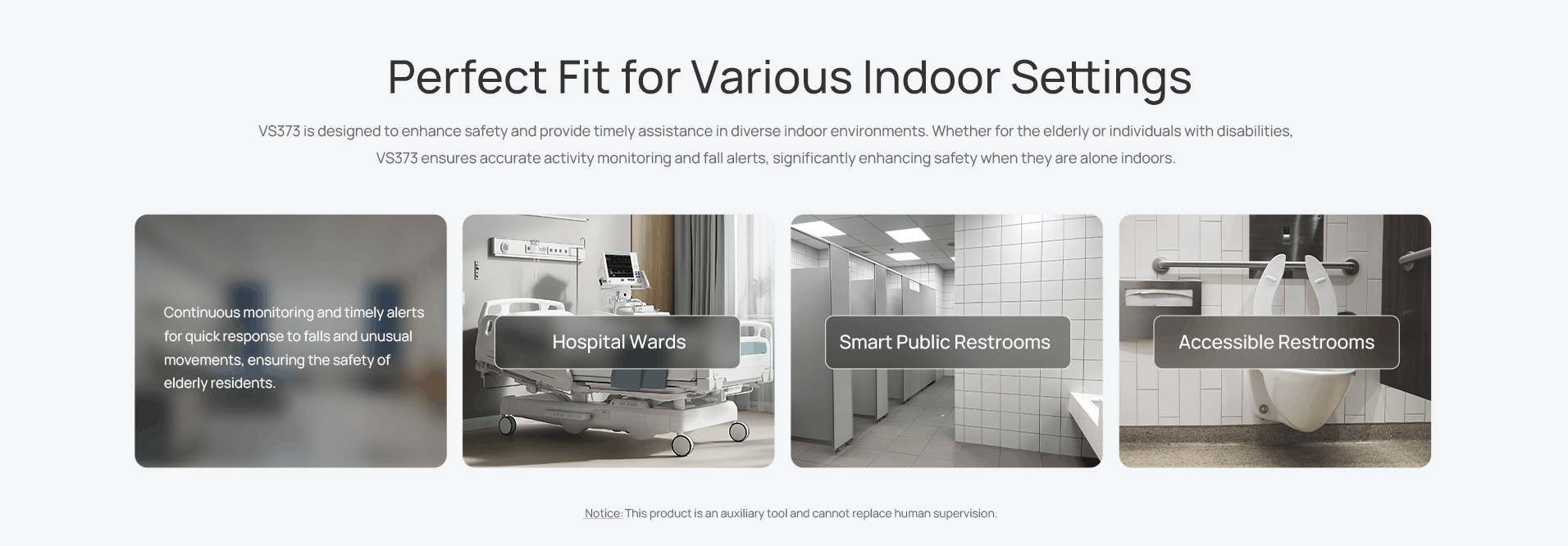
The Milesight VS373 radar fall detection sensor provides:
- Early bed-exit alerts
- Bathroom fall detection
- Privacy-safe monitoring
- Continuous 24/7 operation
- Integration with digital health infrastructure
For hospital management and senior home innovation teams, the question is no longer whether technology should support caregivers — but how to deploy it responsibly and effectively.
Radar-based fall detection offers a practical, privacy-conscious path forward.
If your facility is exploring fall prevention technology or smart ward initiatives, evaluating radar-based solutions like VS373 may be a logical next step in building safer care environments.