MeterOCR: Proven Solution for Accurate PUB Water Meter Digitization
How MeterOCR Works: The Camera-Based Approach
MeterOCR and AI camera technology are changing how commercial and industrial buildings handle water meter reading — yet most FM teams still rely on manual processes.
Despite major advances in building automation, FM teams and sustainability departments often continue relying on:
- Manual site visits
- Handwritten records
- Spreadsheet entry
- Inconsistent reporting
- Periodic visual inspections
This becomes even more problematic for PUB incoming water meters, where operational constraints make conventional retrofitting difficult.
At the same time, pressure is increasing from:
- ESG reporting requirements
- Sustainability initiatives
- Water conservation targets
- Utility cost optimization
- Operational efficiency programs
The challenge is clear:
Building owners need accurate and continuous water consumption data, but traditional solutions are often expensive, intrusive, or difficult to deploy.
This is where the combination of the NE101 AI Camera and MeterOCR middleware provides a highly practical and cost-effective solution.
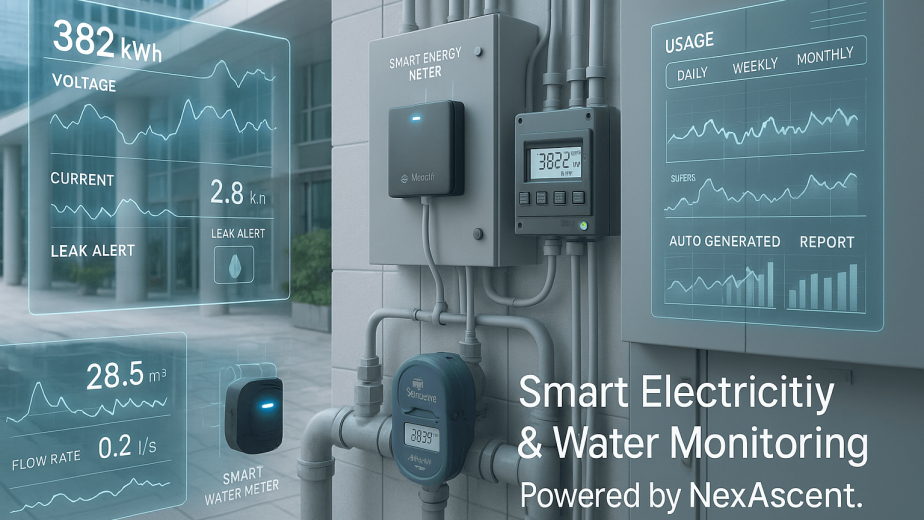
NexAscent’s energy monitoring platform provides the same continuous visibility for electricity consumption.
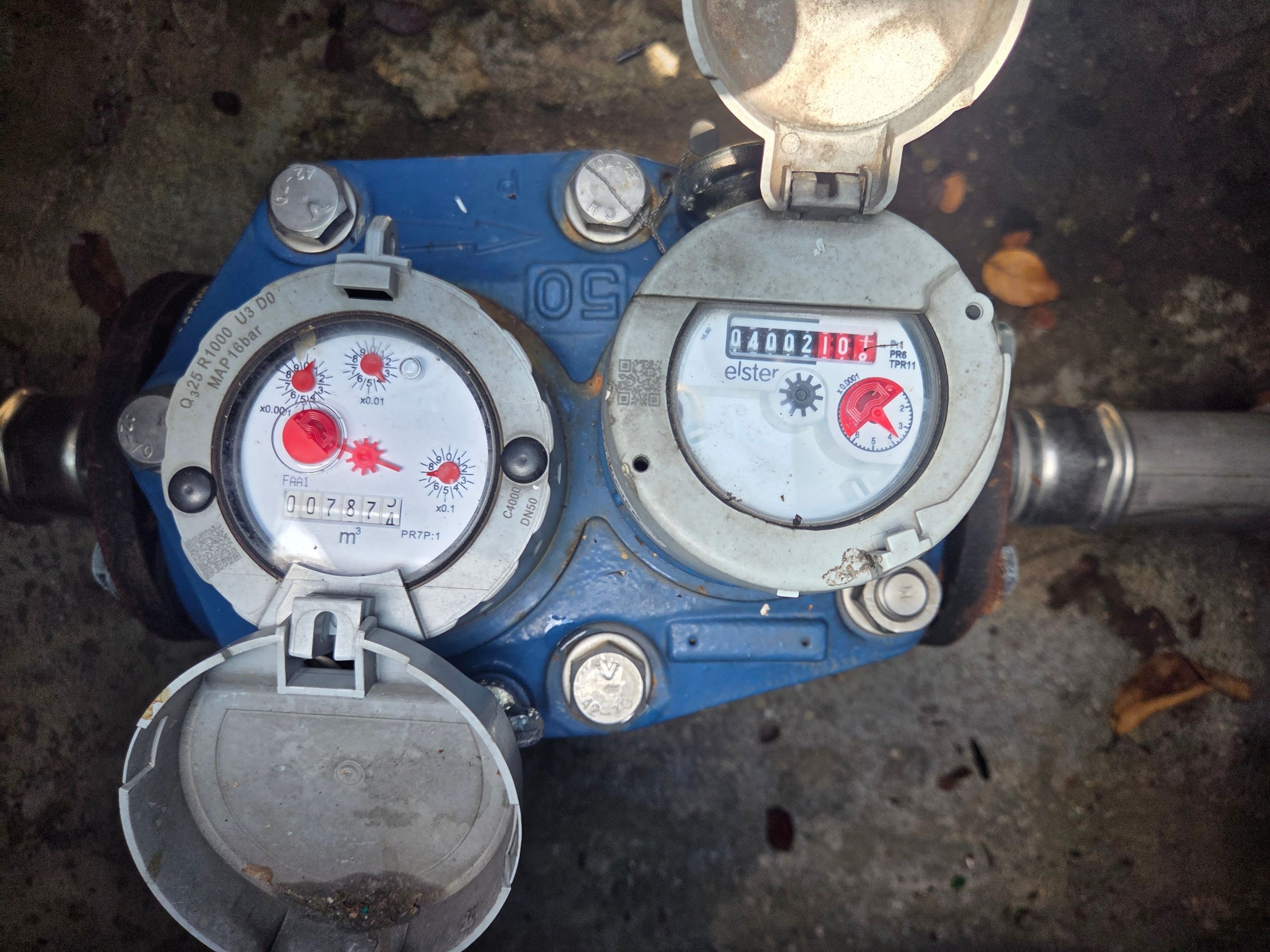
The common compound meter for incoming waterThe Real Operational Problems Behind Water Meter Monitoring
Most discussions about smart metering focus heavily on technology.
But in practice, FM teams face operational problems first.
-
Manual Reading Is Labour Intensive
For many facilities, water meter readings still require personnel to:
- Visit the meter location physically
- Open chambers or utility rooms
- Record values manually
- Upload readings into reports or systems
This process consumes manpower repeatedly every month.
For large facilities or multiple-site operations, this becomes:
- Time consuming
- Error prone
- Operationally inefficient
The problem becomes worse when meters are located:
- Outdoors
- Underground
- Inside chambers
- In hard-to-access locations
- In areas exposed to weather
- Human Errors Are Common
Manual transcription introduces risk.
Common problems include:
- Wrong digit entry
- Missed decimal points
- Misread analog dials
- Inconsistent timing between readings
- Lost records
Even small reading inaccuracies can affect:
- Tenant billing
- Water balancing
- Leakage analysis
- Sustainability reporting
- Regulatory reporting
The issue is not only data collection.
It is data reliability.
- Retrofitting Smart Meters Is Expensive
A common assumption is:
“Just replace the meter with a smart meter.”
In reality, this is often not economical.
Replacing existing PUB-approved incoming meters may involve:
- Plumbing work
- Shutdown coordination
- Regulatory approval
- Integration complexity
- High hardware costs
- Long deployment cycles
For older buildings especially, full replacement can become financially difficult to justify.
Many facilities already have functioning meters.
The real issue is simply:
How to digitize the readings efficiently.
- PUB Anti-Tampering Requirements Limit Installation Options
This is one of the biggest practical constraints.
PUB incoming meters generally cannot have devices physically attached to them in ways that may be interpreted as tampering.
That limits many traditional approaches such as:
- Clamp-on devices
- Pulse readers
- Mechanical modifications
- Sensor attachments
As a result, many retrofit solutions become operationally risky or difficult to approve.
A non-contact approach is often preferred.
Facilities managers can refer to PUB’s guidelines on water meter installation requirements when evaluating retrofit options.”
The Camera-Based Approach
Instead of modifying the meter, the solution uses:
- An AI camera
- Remote image capture
- Cloud OCR processing
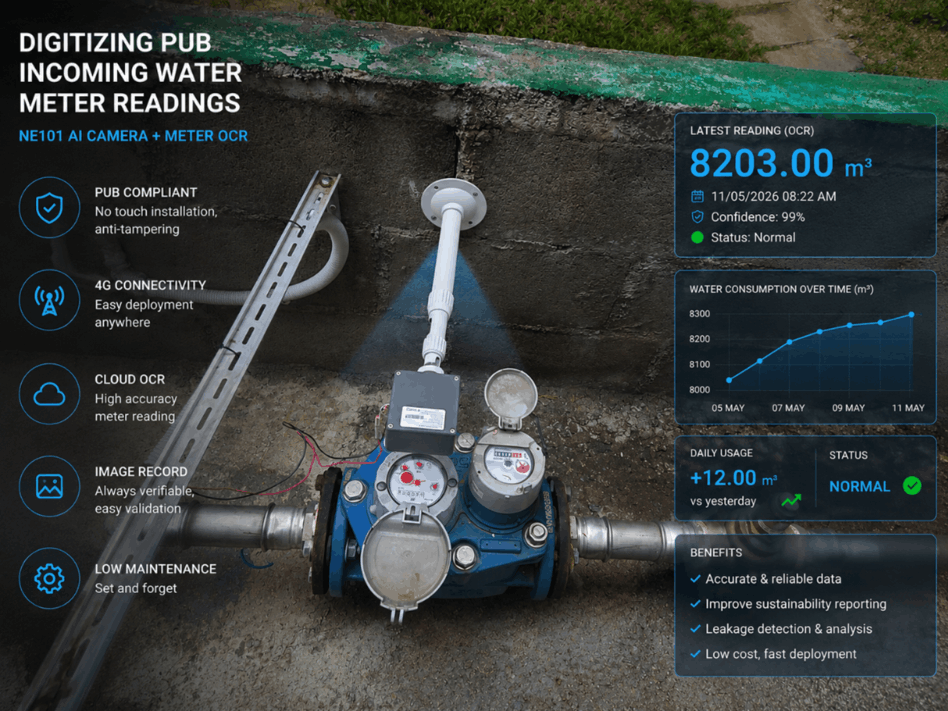
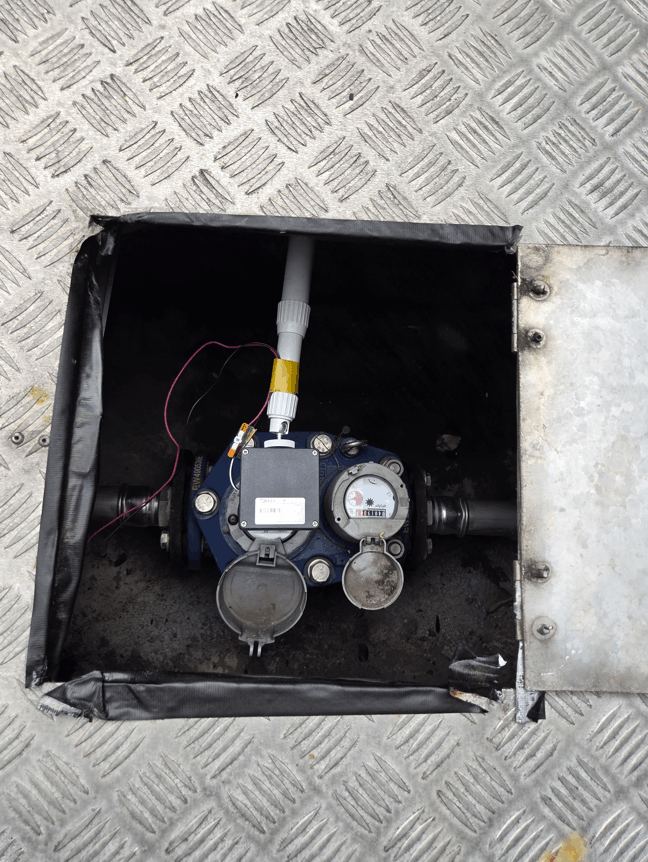
The NE101 AI Camera is mounted nearby, without interfering with the water meter itself.
The camera periodically captures high-resolution images of the analog meter.
These images are transmitted via built-in 4G connectivity to the MeterOCR platform.
MeterOCR then:
- Extracts the meter reading using OCR
- Validates the result
- Stores the image and reading
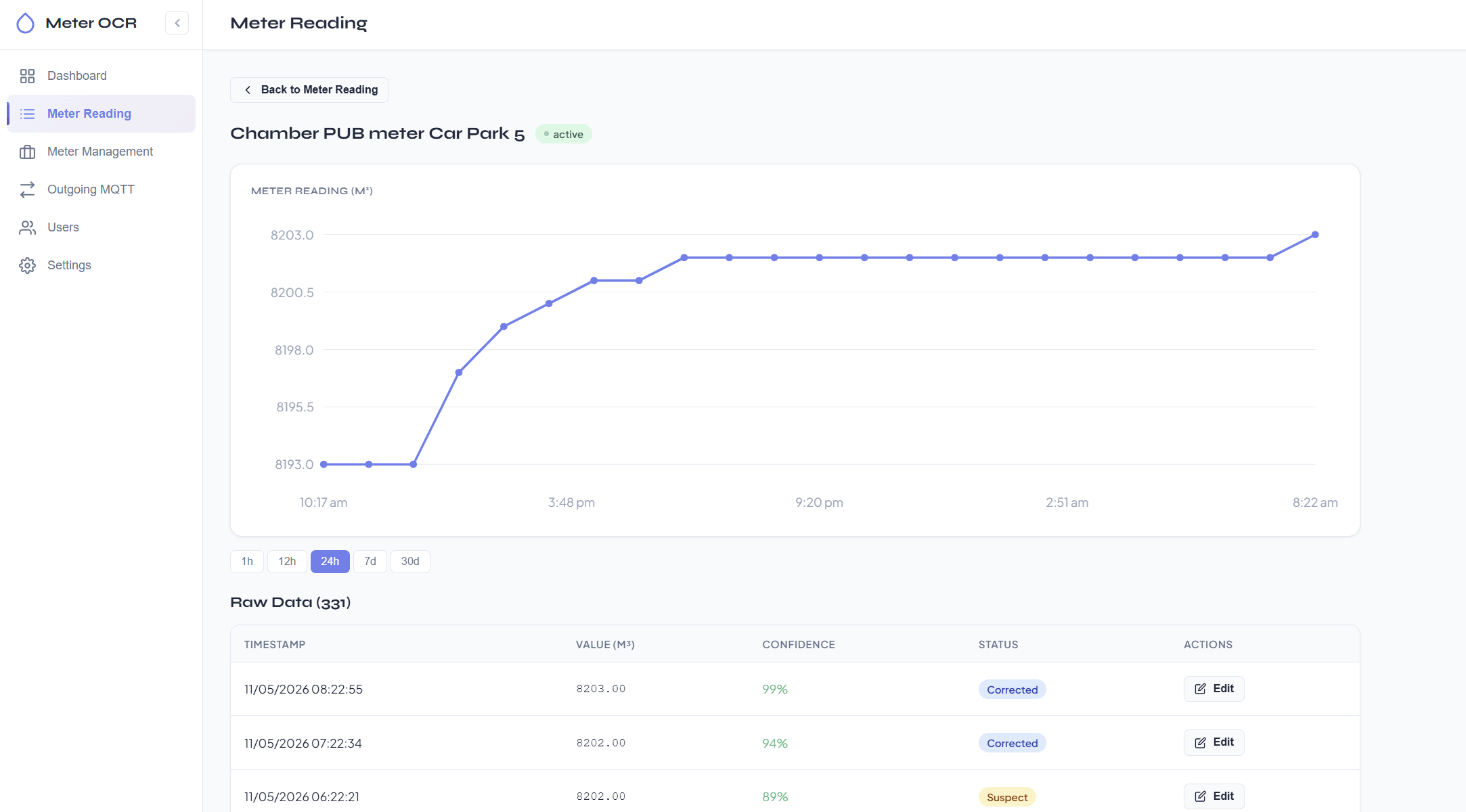
- Displays historical trends and analytics
This creates a simple but powerful workflow:
Existing analog meter → Camera image → Cloud OCR → Digital water consumption data
Why Camera + MeterOCR Is Cost Effective
The biggest advantage of this architecture is that it avoids major infrastructure replacement.
Instead of:
- Replacing the meter
- Installing gateways
- Adding wiring
- Running communication cables
- Modifying plumbing systems
…the deployment only requires:
- Camera mounting
- Power source
- 4G connectivity
This dramatically lowers deployment cost and complexity.
For FM teams, this matters because:
- Installation is faster
- Downtime is minimized
- Existing infrastructure remains untouched
- Scaling across multiple buildings becomes feasible
The result is a very attractive cost-to-value ratio.
4G Connectivity Simplifies Deployment
One overlooked challenge in smart metering projects is networking.
Many buildings struggle with:
- Poor WiFi coverage
- Network segregation policies
- IT approval delays
- Difficult cable routing
Using built-in 4G connectivity removes much of this friction.
The camera can operate independently without relying on:
- Building LAN access
- WiFi credentials
- Additional networking hardware
This makes deployment especially practical for:
- Outdoor chambers
- Remote utility locations
- Legacy buildings
- Multi-site portfolios
In many cases, systems can be operational within a single day.
OCR Accuracy Depends on Real-World Conditions
OCR performance is often misunderstood.
The question is not:
“Can OCR read a perfect meter image?”
Modern OCR already can.
The real challenge is:
- Dirt
- Rain
- Condensation
- Shadows
- Reflection
- Aging dials
- Different meter models
- Uneven lighting
This is why mounting quality matters significantly.
Good installation practices include:
- Stable camera positioning
- Correct viewing angle
- Controlled distance
- Proper lighting
- Protection from direct rain and sun
A properly mounted camera dramatically improves long-term reading consistency.
Why Image Storage Is Important
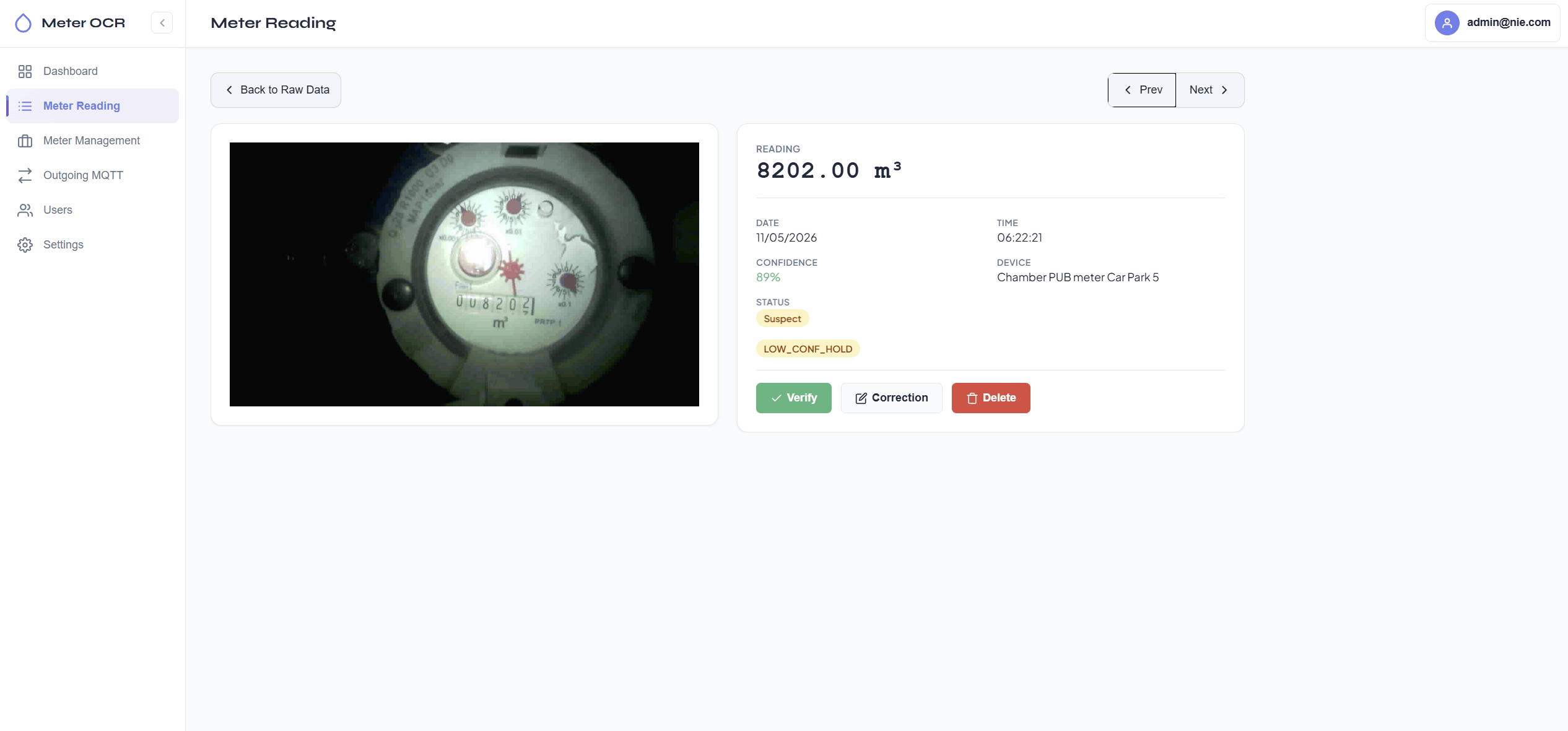
A major operational advantage of MeterOCR is that every reading has a corresponding image.
This provides:
- Full auditability
- Easy validation
- Historical verification
- Operational transparency
If an unusual reading appears:
- FM teams can review the actual image
- Corrections can be made
- The corrected value can be stored
This is far superior to systems where only numerical data is stored without visual evidence.
For sustainability reporting and tenant billing, this becomes extremely valuable.
Continuous AI Improvement
One of the strongest advantages of cloud MeterOCR is continuous learning.
Meters in real-world environments vary significantly:
- Different manufacturers
- Different dial layouts
- Dirt accumulation
- Chamber conditions
- Aging hardware
Because MeterOCR stores actual field images, the OCR engine can continuously improve over time using real operational data.
This creates a long-term advantage:
The system becomes more accurate as more deployment data is collected.
In practical terms:
If a human can visually read the meter onsite, there is a strong probability the OCR engine can be trained to read it reliably as well.
Low Maintenance Matters More Than Fancy Features
Many building technologies fail not because they lack features, but because operational maintenance becomes too complicated.
FM teams generally prefer systems that are:
- Stable
- Simple
- Easy to validate
- Low maintenance
- Fast to deploy
The camera + MeterOCR model works well because it minimizes moving parts and infrastructure dependencies.
There are:
- No mechanical attachments
- No intrusive meter modifications
- Minimal onsite electronics
- Minimal integration complexity
That simplicity becomes a major operational advantage over time.
Practical Benefits for Building Owners and Sustainability Teams
This solution supports multiple operational goals simultaneously:
For FM Teams
- Reduced manual labour
- Easier meter monitoring
- Faster deployment
- Simplified maintenance
- Better operational visibility
For Building Owners
- Lower deployment cost
- Faster ROI
- No major infrastructure replacement
- Scalable across multiple properties
For Sustainability Engineers
- Continuous consumption data
- Improved ESG reporting
- Better water trend analysis
- Easier leakage detection
- Reliable historical records
Conclusion
The challenge with PUB incoming water meters is not measuring water consumption.
The meters already do that reliably.
The real challenge is:
Capturing accurate digital data from existing analog infrastructure in a cost-effective and operationally practical way.
Using:
- NE101 AI Camera
- 4G connectivity
- MeterOCR cloud processing
…provides a low-maintenance, scalable, and cost-effective pathway to digitize water consumption monitoring without replacing existing meters or violating anti-tampering requirements.
For many buildings, this is likely the most practical balance between:
- Cost
- Accuracy
- Deployment speed
- Operational simplicity
- Long-term maintainability
Sometimes the best digital transformation strategy is not replacing infrastructure —
it is intelligently digitizing what already exists.