HACCP temperature monitoring
HACCP-Certified Temperature Monitoring: How LoRaWAN Sensors Help Warehouses, F&B Operators and Importers Meet SFA Requirements
Cold chain failures — and lapses in HACCP temperature monitoring — are among the most common findings in Singapore Food Agency (SFA) inspections — and one of the easiest to prevent with the right monitoring infrastructure. For warehouse operators, F&B businesses and food importers, a temperature excursion isn’t just a quality issue; it’s a regulatory one, with consequences ranging from stock write-offs to licence suspension.
This article covers which authority actually governs HACCP temperature monitoring in Singapore, what the regulations require, and how HACCP-certified LoRaWAN sensors — paired with an automated reporting dashboard — turn a manual, paper-based logging chore into a defensible, audit-ready system..
SFA, Not NEA: Getting the Right Authority
A common point of confusion is whether NEA or SFA governs food temperature compliance. Since April 2019, the answer is clearly SFA (Singapore Food Agency). NEA’s food-related functions — together with those of the former AVA and relevant parts of HSA — were consolidated into SFA when it was formed as a statutory board under the Ministry of Sustainability and the Environment. NEA today focuses on environmental protection, public cleanliness and vector control; it no longer regulates food safety or cold chain compliance directly.
SFA is now the single agency responsible for food safety across the entire supply chain — production, import, manufacturing, storage, distribution and retail. Any business handling temperature-sensitive food in Singapore — a warehouse operator, a food importer, a central kitchen, a restaurant, or a cold storage facility — falls under SFA’s oversight for HACCP temperature monitoring, not NEA’s.
Which Regulations Apply
Businesses should be tracking the following framework:
- Sale of Food Act 1973 and Food Regulations — the current baseline governing food safety, handling and licensing conditions. These remain in force and are being progressively repealed and folded into the framework below.
- Environmental Public Health (Food Hygiene) Regulations — still the operative rules for hygiene practices at food premises, including storage and handling.
- Food Safety and Security Act 2025 (FSSA) — SFA’s new consolidating law, passed in January 2025 and rolling out in phases through 2028. It will eventually repeal the Sale of Food Act and introduce the “Food Control Plan,” a licensing condition requiring every licensable food business to formally document its preventive food safety measures — which is effectively a codified HACCP requirement. Businesses should plan for this now rather than treat it as a future problem.
- HACCP (Hazard Analysis and Critical Control Points) — not a single statute, but the internationally recognised framework behind HACCP temperature monitoring, required by SFA licensing, audits and (for exporters) many overseas buyers.
In practice, SFA requires HACCP temperature monitoring at every identified CCP — continuous or at defined intervals — along with documented corrective actions for excursions and records retained, typically for at least two years, for inspection on demand.
HACCP Temperature Monitoring Requirements in Singapore
The specific thresholds below are drawn directly from SFA’s published conditions of licensing, warehousing practice guidelines and its most recent food safety advisory (Dec 2024):
| Stage | Requirement | SFA source |
|---|---|---|
| Chilled storage | 0°C to 4°C (cold stores/meat, fish & egg processing); general food premises allow a wider -4°C to 7°C band depending on the product | Conditions of Licensing for Meat, Fish and Egg Processing Establishments and Cold Stores; Conditions of Licensing for Food Establishments |
| Frozen storage | -18°C or below | Conditions of Licensing for Meat, Fish and Egg Processing Establishments and Cold Stores; Good Warehousing Practices |
| Chilled transport | 4°C or below, core temperature not exceeding 7°C | Good Warehousing Practices |
| Frozen transport | -18°C or below, core temperature not exceeding -12°C | Good Warehousing Practices |
| Cooking (meat, poultry) | Core temperature of at least 75°C, held for 2 minutes | Advisory on Food Safety Practices for Food Establishments (6 Dec 2024) |
| Danger zone | 5°C to 60°C — ready-to-eat food should not remain in this range for more than 4 hours | Advisory on Food Safety Practices for Food Establishments (6 Dec 2024) |
Two figures often repeated in third-party compliance guides — a general “8°C” chilled-display ceiling and a standalone “hot holding above 60°C” rule — don’t appear as explicit standalone thresholds in SFA’s published documents and have been left out of this table rather than stated as regulatory fact. (The one specific display rule SFA does publish is for ready-to-eat raw seafood such as sushi and sashimi, which must be displayed below 5°C.) Businesses should still hold hot food comfortably above the 60°C danger-zone ceiling as standard practice, but should treat it as good practice rather than cite it as a distinct SFA figure.
The HACCP temperature monitoring burden isn’t just hitting these numbers — it’s proving continuously that you did, with a monitoring method, an alert mechanism for excursions, a documented corrective-action trail, and calibration records for the instruments themselves. Manual spot-checks with a handheld probe, logged on paper a few times a shift, satisfy none of this well: they leave gaps between readings, depend on staff discipline, and produce records that are tedious to compile and easy to dispute during an audit.
Where the TS30x and TS201 Fit
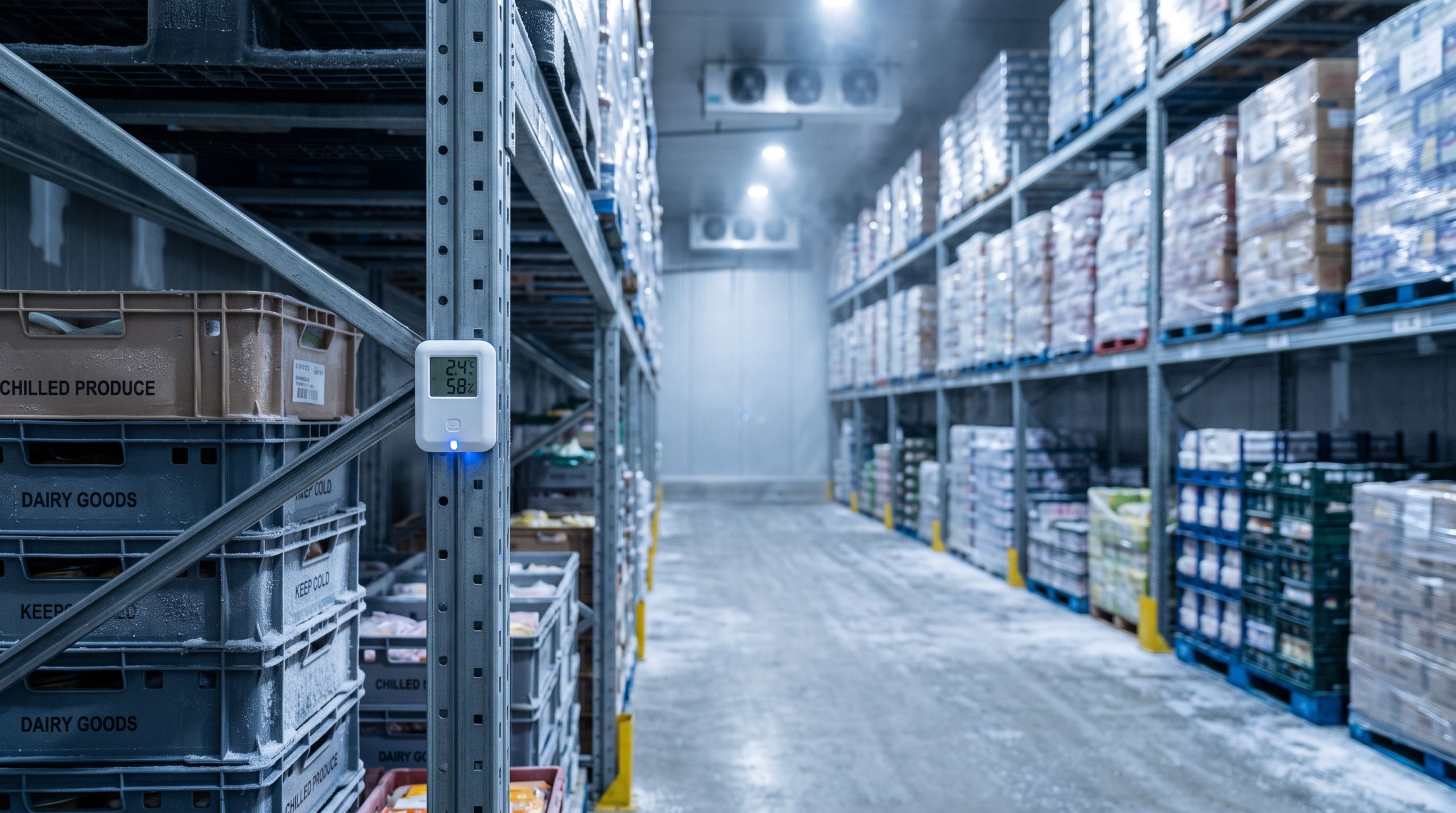
Milesight’s TS30x and TS201 are LoRaWAN temperature (and optional humidity) sensors built specifically for HACCP temperature monitoring, with certifications that map directly onto the SFA/HACCP requirement set:
- HACCP-compliant automated monitoring with anti-tamper data recording, meeting the authenticity standard of 21 CFR Part 11B for electronic records — relevant for businesses that also need to satisfy US FDA-linked buyer requirements on top of SFA.
- EN12830 certification, the European standard specifically for temperature recorders in the transport, storage and distribution of chilled, frozen and deep-frozen food — a recognised benchmark auditors and overseas customers look for.
- Continuous, unattended logging (10,000 stored readings on the TS30x; 4,000 on the TS201) with local storage and automatic retransmission if connectivity drops, so there are no gaps in the record even during a network outage.
- Threshold and change alarms built into the device, so an excursion outside the permissible range triggers an alert rather than waiting to be discovered on the next manual check.
- Simplified PDF/CSV export, reducing the effort needed to produce inspection-ready documentation.
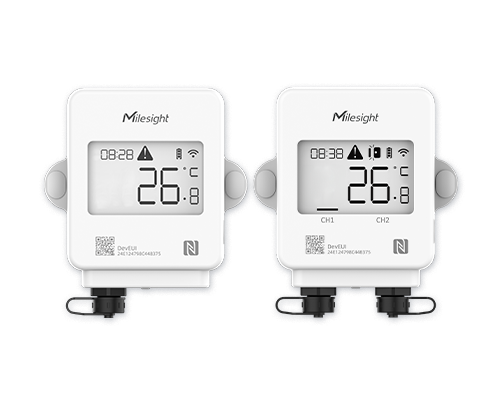
The two models suit slightly different deployment contexts:
- TS30x (TS301/TS302) — supports PT100, DS18B20 or TH probes, including a food-grade needle probe rated to ±0.4°C for insertion directly into product (e.g., core temperature checks on incoming deliveries), plus a display screen for on-site readings and IP65 protection. TS302 allows two independent probe channels, useful for monitoring both a chiller’s air temperature and a specific product simultaneously.
- TS201 — a more compact, IP67-rated unit built around a DS18B20 or TH probe, well suited to space-constrained installations such as inside reefer trucks, small chillers or display cabinets, with battery life up to roughly 8–10 years at typical reporting intervals.
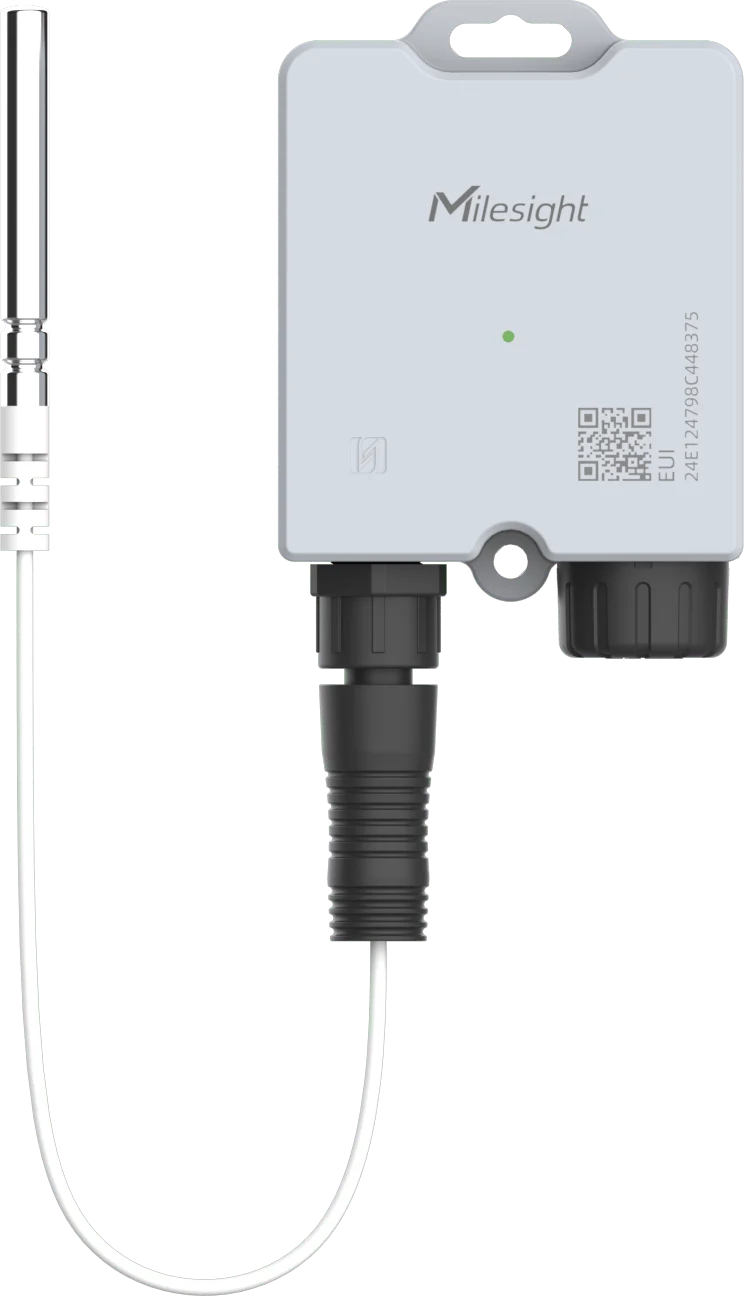
Both connect over standard LoRaWAN infrastructure, so a single gateway can cover an entire warehouse floor, cold room, or loading dock without the cabling and per-point cost of a wired system.
Turning Sensor Data into a Compliance Record
Sensors alone don’t satisfy an auditor — the documentation trail does. Paired with a dashboard capable of generating scheduled HACCP reports (daily or weekly) and real-time alerts when readings breach the permissible range, the sensor data becomes the CCP monitoring and verification record SFA’s HACCP requirement actually asks for: a continuous log, an automatic notification path for corrective action, and a standing export ready for inspection — without a staff member compiling it by hand.
Who Should Be Looking at This
This combination is most relevant for:
- Warehouse and 3PL operators running chilled or frozen storage for third-party clients, who need to demonstrate CCP monitoring across multiple zones and tenants.
- F&B businesses — central kitchens, restaurants and food manufacturers — with chiller, freezer and hot-holding CCPs that SFA inspects directly, and who may also need HACCP documentation for retail chain supply agreements.
- Food importers and distributors, where the transport and receiving legs are frequently cited as under-monitored CCPs, and where SFA’s forthcoming Food Control Plan requirement will make formal, documented preventive measures a licensing condition rather than a best practice.
For any of these operators, the cost of implementing HACCP temperature monitoring with certified sensors is small relative to the cost of a single failed inspection, a rejected shipment, or a lost retail contract over undocumented temperature control.